With Metal Gear Solid V The Phantom Pain about to drop, I’ve been playing a bunch of Ground Zeroes. Finally decided to go after an S Rank. And here it is. This is the easiest one in the game, so if you too would like one…Just…Do this.
games
Destiny Beta
Highlights of the action from my time with the Destiny Beta.
Counter Culture LIVE: E3 2014
Paul “TVPaulD” Douglas and Tom “SteepInKline” Kline are back with another roundup of their thoughts on the Electronic Three…But this time, there’s Video. And it’s broadcasting LIVE. This manner of nonsense can only lead to trouble, and it’s all right here.
Xbox One Debacle Redux
So, yesterday, Microsoft did a one-eighty on their consumer-hostile disc-based game DRM policies. All through today, some people have been lamenting the loss of the Xbox One Family Sharing plan as a part of that. As it turns out, they shouldn’t have been. It turns out, it was going to be awful. One of the architects of the Xbox One has (allegedly) posted the following information on PasteBin. It’s got more than its fair share of crazy, and I’m going to respond to it paragraph-by-paragraph.
It’s 4am and I’m still up, some hours ago, we at Microsoft had to basically redact on our Always Online infrastructure and dream. Being part of the team that created the entire infrastructure to include the POS (point of sale) mechanisms I must say that I am extremely sad to see it removed. But the consumer knows what is best, I can place the blame on no one but us here at Microsoft. We didn’t do a good enough job explaining all the benefits that came with this new model. We spent too much of our time fighting against the negative impressions that many people in the media formed. I feel that if we spent less time on them and more time explaining the great features we had lined up and the ones in the pipes gamers and media alike would have aligned to our vision. That stated, we felt the people we would have loss would have been made up by the people we would have gained. We have 48 million Xbox 360 users connected online nearly 24 hours a day. That is much more than any of our closet competitors and vastly more than Steam. The people that we would have left behind I feel would have eventually come around as they saw what advantages the platform had to offer. But as I previously stated we at Microsoft have no one to blame other than ourselves for failing to convince those hesitant to believe in our new system. Microsoft might be a big company, but we at the Xbox division have always been for the gamer. Everything we’ve done has always been for them, we have butt heads with the executives many times on what we’ve wanted to, some times we lost (removing the onboard processor from Kinect 1.0) and other times we’ve won (keeping Gears of War as an exclusive).
Okay, right off the bat he’s off to a bad start, because he just tried to characterise “making Gears of War an Xbox console-exclusive” as being something done for the benefit of gamers. Now, on some level, I’m sure there are Xbox fans who were pleased Gears never went to PlayStation. But, really, nobody but Microsoft benefitted from that.
While publishers have never come right out to us at MS and say “We want you to do something about used gaming” we could hear it in their voices and read it in their numerous public statements. The used gaming industry is slowly killing them and every attempt to slow down the bleeding was met with much resistance from the gaming community. I will admit that online passes were not well received nor were they well implemented, but I felt given time to mature it could have turned into something worth having as a gamer much like DLC (we went from pointless horse armor to amazing season passes like Borderlands 2!). Videogame development is a loss leader by definition and unlike other forms of media videogames only have one revenue stream and that is selling to you the gamer. So when you buy a game used you’re hurting developers much more than say a movie studio. Many gamers fail to realize this when they purchase these preowned games. It is impossible to continue to deliver movie like experiences at the current costs without giving up something in return. It’s what gamers want and expect, the best selling games are blockbusters, the highest rated are blockbusters, the most loved are blockbusters. How can developers continue to create these experiences if consumers refuse to support them? Many will argue the development system is broken, and I disagree. The development system is near broken, it’s used gaming that is broken, but regardless I think more emphasis on this from both us at Microsoft and publishers would have gone a long way in helping educate the gamer, but again it is us who dropped the ball in this regard for that we’re sorry.
Here we have a tired re-tread of the false idea that used gaming is killing the gaming industry. It really isn’t. If it was, used sales would be killing every entertainment industry that has them. Further, there is absolutely zero reason to believe that eliminating the used option would lead to more sales of new games, and every reason to believe it would just mean less sales overall. But you all know this. Hell, even the third party publishers have had to start begrudgingly admitting this. Used sales allow the new game buyers of the future (kids) to develop interest in franchises they will be loyal customers to later. Used sales contribute to the ecosystem. But again, you all know this. Microsoft was fundamentally out of touch with the real world on this.
Next, he suggests Online Passes might have evolved into something positive for consumers. That’s…Certainly dreaming big. I fail to see how that is even conceptually possible myself. Maybe you guys have some idea what the hell he was getting at? I sure don’t.
Anyway, he moves on to blaming consumers for the industry being inefficient and not generating enough money, whilst adamantly refusing to accept the idea that if you can’t afford to produce something you should probably find a cheaper way to produce it. He’s blaming consumers, and then he almost flat out calls consumers stupid, saying that Microsoft needed to ‘educate’ consumers about how unfair it was of them to want to pay less for games, as if seeking the highest possible value is somehow a behaviour unique to gamers and not something any rational consumer does. Frankly, it arguably becomes more insulting as he continues, because no sooner has he implied we’re stupid and Microsoft are a benevolent force seeking to enlighten us, than he tries to walk it back by dropping a quick “but it’s our bad” – without, actually, retracting the implication that consumers are wrong and Microsoft alone knows what’s best.
Going back to Xbox One’s feature set, one of the features I was most proud of was Family Sharing. I’ve browsed many gaming forums and saw that many people were excited about it as well! That made my day the first time I saw gamers start to think of amazing experiences that could come from game sharing. It showed that my work resonated with the group for which I helped create it for. I will admit that I was not happy with how some of my fellow colleagues handled explaining the systems and many times pulled my hair out as I felt I could have done a better job explaining and selling the ideas to the press and public at large. I’m writing this for that reason, to explain to gamers how many of the features would have worked and how many of them will still work.
I find this kind of incredible. He seems to be implying there was absolutely a clearly-defined, succinct set of principles and ideas. If that’s the case, why did employees like himself not simply produce a simple, one-page memo for the likes of Don Mattrick and Phil Harrison to memorise? Anyway, more on this later.
First is family sharing, this feature is near and dear to me and I truly felt it would have helped the industry grow and make both gamers and developers happy. The premise is simple and elegant, when you buy your games for Xbox One, you can set any of them to be part of your shared library. Anyone who you deem to be family had access to these games regardless of where they are in the world. There was never any catch to that, they didn’t have to share the same billing address or physical address it could be anyone. When your family member accesses any of your games, they’re placed into a special demo mode. This demo mode in most cases would be the full game with a 15-45 minute timer and in some cases an hour. This allowed the person to play the game, get familiar with it then make a purchase if they wanted to. When the time limit was up they would automatically be prompted to the Marketplace so that they may order it if liked the game. We were toying around with a limit on the number of times members could access the shared game (as to discourage gamers from simply beating the game by doing multiple playthroughs). but we had not settled on an appropriate way of handling it. One thing we knew is that we wanted the experience to be seamless for both the person sharing and the family member benefiting. There weren’t many models of this system already in the wild other than Sony’s horrendous game sharing implementation, but it was clear their approach (if one could call it that) was not the way to go. Developers complained about the lost sales and gamers complained about overbearing DRM that punished those who didn’t share that implemented by publishers to quell gamers from taking advantage of a poorly thought out system. We wanted our family sharing plan to be something that was talked about and genuinely enjoyed by the masses as a way of inciting gamers to try new games.
And this is where it gets ridiculous.
The way Family Sharing was understood, based on Microsoft’s vague FAQ, people shared to would have full access to the game. Nothing ever implied otherwise. The questions were all about how many people could use how many games at once, and what the prerequisites for being included in someone’s sharing plan were. Now, to be fair, he addressed the latter, and the requirements were indeed at the more positive end of the readings people had of the FAQ.
But here he is, trying to make us believe that Family Sharing was this huge, mind-blowing revolution…And what we find is, it was actually way more limited than the version we were all imagining, which we were still not universally sure was worth the tradeoff. His whole aim in writing this was to convince us the old Xbox One philosophy was better after all, and it turns out it was actually worse than we imagined when we rejected the idea in the first place.
This is stunning. I cannot believe Microsoft actually thought this was going to win people over to their policies. I mean…Look, at PlayStation Meeting 2013 (Sony’s two-hour ‘The Future of PlayStation’ reveal of the PS4), Sony had the CEO of their newly acquired Gaikai service reveal that Sony plans to allow everygame on the PSN Store to be tried before purchase, instantly, by streaming the game. Now, sure, Microsoft was going to let the games run natively and we don’t know if Sony’s option will allow progress to carry over to the full game (It’s unlikely to). But, on the other hand, you don’t need to be in a friend who has the game’s sharing group. That’s one less hoop to jump through. Microsoft’s solution is really not that impressive. Frankly, it’s kind of pathetic. Fifteen minutes? Are you kidding me? It’d take longer to download & install the game!
The motto around the offices for the family plan was “It’s the console gaming equivalent to spotify and pandora” it was a social network within itself! The difference between the family sharing and the typical store demo is that your progress is saved as if it was the full game, and the data that was installed for that shared game doesn’t need to be erased when they purchase the full game! It gave incentive to share your games among your peers, it gave games exposure, it allowed old games to still generate revenue for publishers. At the present time we’re no longer going forward with it, but it is not completely off the table. It is still possible to implement this with the digital downloaded versions of games, and in fact that’s the plan still as far as I’m aware.
No, it’s not even remotely like Spotify or Pandora. OnLive Pass is like those things. PSPlus’s Instant Game Collection is even arguably like those things. The Xbox One Family Sharing Plan was like BlackBerry Messenger Music. BBM Music was a colossal failure. You know why? Because you couldn’t access any music your friends weren’t sharing, which meant there wasn’t a lot of use to it. Twitter’s #Music has the same problem. This kind of “sharing” of content is way too limiting. People prefer discovery where they can passively see what their friends are into and then check it out for themselves. Something like seeing “Sarah Greene earned a Platinum Trophy in Knack” and then going and playing the game. Accessing a gimped version of someone else’s library is like (though still inferior to) being at their house and browsing the shelf. It works, sure, but it’s a much less passive experience for both parties, and that makes it a bigger hassle.
It’s certainly not some major innovation that justifies the DRM policy on disc games. It does nothing that Sony’s PS4 isn’t doing anyway – and as noted above, Sony’s PS4 is arguably doing it better.
Another feature that we didn’t speak out about was the fact we were building a natural social network with Xbox One in itself that didn’t require gamers to open their laptops/tablets to post to their other friends nor did they need to wrestle with keyboard add-ons. Each Xbox Live account would have a full “home space” in which they could post their highest scores, show off their best Game DVR moments, what they’ve watched via Xbox TV and leave messages for others to read and respond to. Kinect 2.0 and Xbox One work together and has robust voice to text capabilities. The entire notion of communicating with friends you met online would have been natural and seamless. No reliance on Facebook, or Twitter (though those are optional for those who want them). Everything is perfectly crafted for the Xbox One controller and Kinect 2.0 and given that shine that only Microsoft can provide.
I’m not going to waste too much time on this, because it ties into the same thing about the feature not being all that unique. Both Wii U and PS4 also feature bespoke social networking features which can show off high scores, screenshots and video. Microsoft guy seems to be implying that the integration of Kinect with this stuff makes it much better, and for some gamers maybe it is. But many of them, myself included, think barking orders across the room and waving hands around like a flight-traffic-controller are crummy ways to control a TV experience, so that really isn’t all that much of a plus.
We at Microsoft have amazing plans for Xbox One that will make it an amazing experience for both gamers and entertainment consumers alike. I stand by the belief that Playstation 4 is Xbox 360 part 2, while Xbox One is trying to revolutionize entertainment consumption. For people who don’t want these amazing additions, like Don said we have a console for that and it’s called Xbox 360.
And he closes things up by being a total dick. As if the rest of his article wasn’t already enough of a pile of shit.
There’s a reason this posting is anonymous. If the name was attached, this guy would be getting the Adam Orth Special. This is the exact same horrendous messaging that Microsoft made the change to get away from. In fact, it’s arguably worse, because this guy genuinely seems to think this is an improvement on the message coming form the likes of Don and Phil Harrison. He explicitly said he was frustrated about how much trouble guys like them were having articulating his “vision”.
Well I got news pal, I liked it better the way they described it, and I hated that shit. What does that tell you about your revolutionary vision?
E3 2013: Greatness Awaits
Going into this week’s Electronic Entertainment Expo, I was as jaded and cynical about the video gaming industry as I have ever been. In years gone by, for every E3 in the past eight years, I have gone in excited to see what was going to be shown. Ready and eager to be wowed by the big three platform holders. Usually, at least one always did manage to excite me. More often than not, it was Nintendo, whose fun-first games design philosophy has always really spoken to me. But many a time, Sony showed a Killzone 2 or Microsoft a Halo: Reach (Halo. But with jetpacks) or what have you, and I was as delighted with their showing as I as when I first saw Nintendo’s Wii in action, in 2006.
Last year though, nothing anyone had to say about home consoles enthused me especially. Nintendo’s Wii U revelations were neat, and it’s undoubtedly a cool bit of hardware, but not in a “huge leap forward” kind of way. And aside from the interest in the exciting newness of Wii U, nothing but 3DS games really caught my eye and made me go “wow, I need to own this!”.

The back half of last year, I got Halo 4, Epic Mickey 2 and Borderlands 2. There were some other games I was interested in enough to have played if I had more money, but nor was I sat in my room before E3 2013 thinking “gosh I missed so many good games”. I’m going to be playing XCOM: Enemy Unknown from tomorrow, thanks to Sony generously giving me a free month of PSPlus, and I have wanted to check it out. But it was the game’s coverage upon its release at Giant Bomb which got me interested in that game, not E3 2012.
Really, I left E3 2012 feeling throughly bored. Very little in the home console space felt new, exciting or fresh. The PS3 and Xbox 360 were still pushing Call of Duty and Fifa and Madden…I’m so done with Call of Duty I can’t even describe it. It bores me to tears. And seemingly every other game being touted was an out-and-out clone of it.

Madden and Fifa were given frustrating prominence at Microsoft’s #XboxReveal
Microsoft’s damp squib #XboxReveal event, where they unveiled the improbably named third Xbox; the Xbox One; compounded my feelings of detachment and boredom with the console gaming mainstream. All I could see were games I’d either had my fill of or never wanted to begin with. Sony’s “The Future of PlayStation” PS4 reveal event left me with a slightly more positive impression a while before, but it was too early to say for sure if the games were going to draw me in.
Microsoft’s event in particular presented a vision for the future of gaming which, to me, was a total non-response to everything that was wrong. It was as if Microsoft were oblivious to how expensive and unsustainable things were. As if they saw no problem with assembly-line sequels to generic games with little creativity. As if the rise of the increasingly high-quality and inventive indie games on platforms as diverse as iOS, Android, Windows, OS X, Wii U, PlayStation 3 & PSVita was mere rumour and conjecture. Here then was a console which would do what AppleTV and Roku already do at a significantly lower cost (and without the recurring subscription fee Microsoft demands for Live Gold to get at the media streaming services) and also play a load of painfully unexciting games which are virtually indistinguishable from the ones you’ve been playing for the past seven years. Except for those powered by EA Sports Ignite, which are distinct in that the engine makes character models more detailed but a million times less believable.
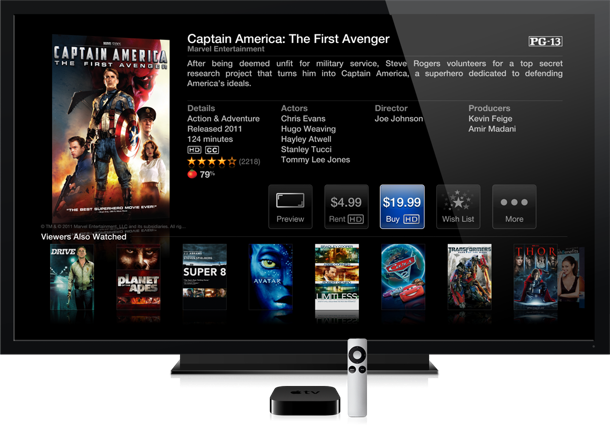
Apple’s diminutive AppleTV already does a lot of streaming video, for a low cost
I had been told to wait for Microsoft’s E3 Press Conference. There, it was said, Microsoft would roll out the games that make the Xbox One worth a damn. Well; after confirming ahead of time that yes, they are – unaccountably – messing around with the existing game sales model; Microsoft trotted out first at E3 and showed some relatively interesting games. None that made me sit up and really go “whoa”, but some decent ideas that had some nice graphics. Then they said they wanted £429.99 for their console. A price eerily similar to the one Sony charged for the PLAYSTATION 3 (£425), back before they resolved to make amends for their hubris in planning that system’s launch. Nothing I saw from Microsoft, game-wise, justified that cost of entry.
So then, it fell to two of the third party juggernauts to have their say. EA and Ubisoft. EA said the magic words for me with “Star Wars Battlefront”, but I was (at the time) disappointed that it was coming to platforms I wasn’t planning on owning. Nothing else they showed particularly excited me. Their next-gen sports titles continue to look horrible, and their presentations annoyed me with their superfluous buzzword names for minor physics and graphical subroutines. Ubisoft showed a couple of games I was already interested in (South Park, Watch_Dogs, Assassin’s Creed 4) but had nothing new that piqued my interest. And to be honest, I would go on to be more enthused by the Assassin’s Creed and Watch_Dogs demos in Sony‘s Press Conference than those in Ubisoft’s own.

Ubisoft’s inventive “Watch_Dogs”
Then came the wait for Sony, with me in a sort of “Meh” sate of mind. Nothing I’d seen of E3 had yet completely sold me on the continuation of the big-budget high-end video game. However, I had less reasons to run in the opposite direction than previously. If nothing else, at least they had stopped parading Call of Duty in front of me as if it was new, and had instead shown things like Watch_Dogs which are a bit more inventive.
Sony nailed it. They sold me games-wise. Kingdom Hearts 3’s mere announcement was a standout, along with the demos of Assassin’s Creed 4 & Watch_Dogs (As I mentioned), the trailers for inFamous: Second Son & Killzone: Shadowfall, the procession of great looking indie games like Transistor, Outlast and the Abe’s Odyssey remake and…Well, the real jaw dropper was Bungie’s Destiny. I was already mostly on board with the game conceptually. But seeing it in action floored me. It combines the appeals of Halo, Borderlands and MMOs into a gorgeous package. For me, it looks very much like Destiny is the next big thing – succeeding, with any luck, the painfully repetitive Call of Duty. And probably obviating the need for more Halo.
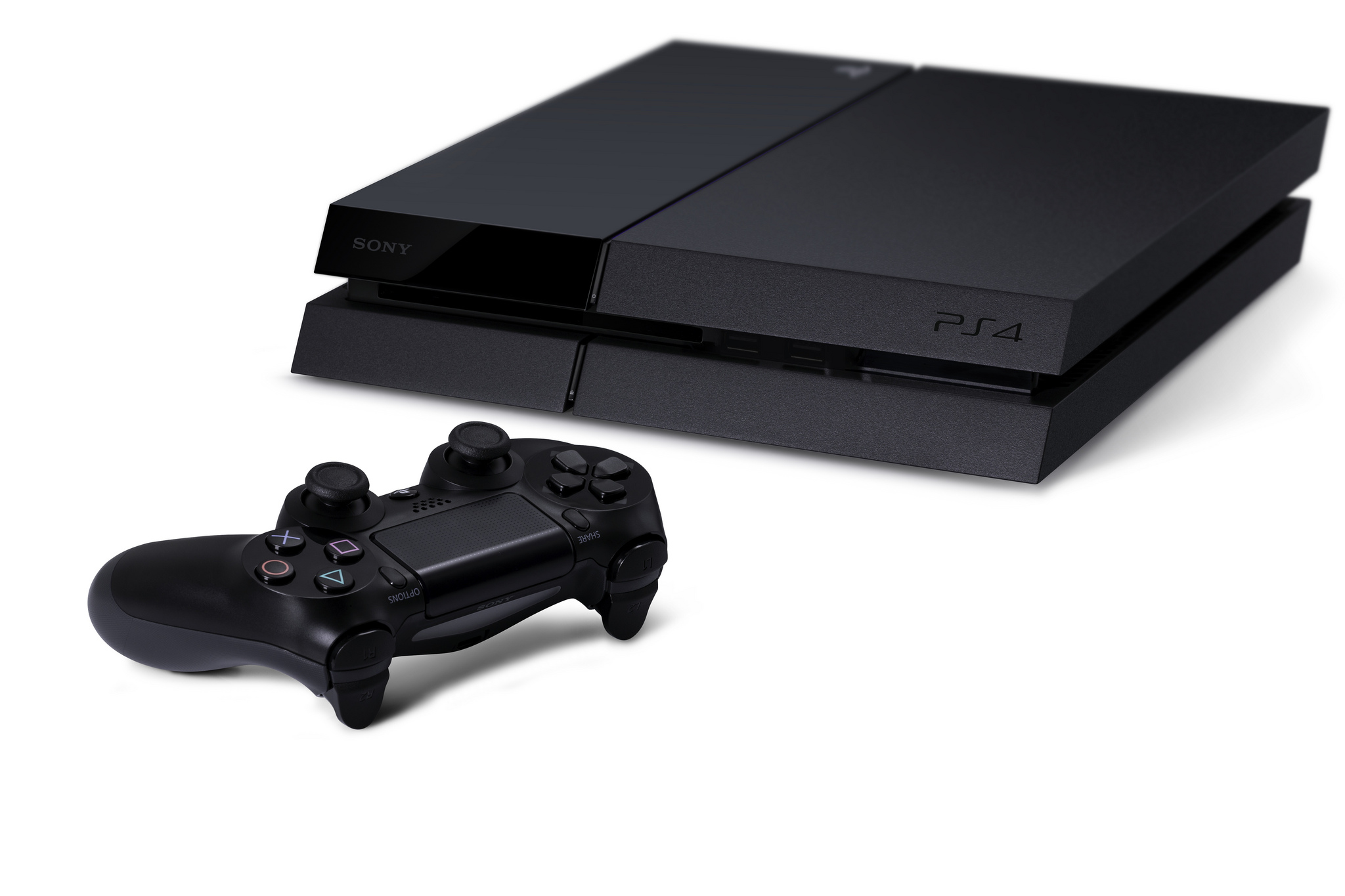
Then, as if that wasn’t enough, Sony confirmed the PS4 will not lock down games with draconian DRM, won’t require online authentication checks and is coming in £80 ($100) cheaper than the Xbox One, at a more than reasonable £350 for the 500GB hard drive equipped machine (And yes, it ships with a headset in the box, undoing a frequent PS3 frustration – unlike the Xbox One incidentally, which instead includes the divisive KinectOne. Also in the box is an HDMI cable, undoing another PS3 foible). Their hardware is significantly more attractive too, evoking the much-beloved PS2.
Indeed, the only bad news from Sony was them putting multiplayer gaming on the PS4 behind the PSPlus paywall. But with online entertainment services like Netflix still available on the free tier (Unlike on Microsoft’s platforms), and PSPlus being so compelling a service as it is with Instant Game Collection that I was planning to buy at least a year’s worth later his year anyway, I wasn’t particularly phased by that.
You can buy a PS4 and a year’s PSPlus, and be set for a year. You’d get a new game every month, for an upfront cost less than the price of one new boxed game. It’s tremendous value. Which is the key thing here. Xbox One, and the vision of the next generation it follows, and which I was afraid of, is terrible value for money. PS4, in stark contrast, is terrific value for money. I’m on board. Sony, you’re PS4 is my number one pick among next generation hardware.
So where does that leave Nintendo? They went earlier today with a slightly more understated event, a Nintendo Direct @ E3 broadcast. They didn’t blow me away. But nor was I disappointed. Mario Kart 8, the latest entry in my favourite franchise, looks fantastic. Similarly, Super Mario 3DWorld and the new Super Smash Bros pair look like wonderful new games. And the Wind Waker HD remake sure looks pretty, and having not had a chance to play it the first time around anyway, its lack of out-and-out newness doesn’t really bother me. Oh, and on a handheld aside, the new Pokémon games look like must-haves.
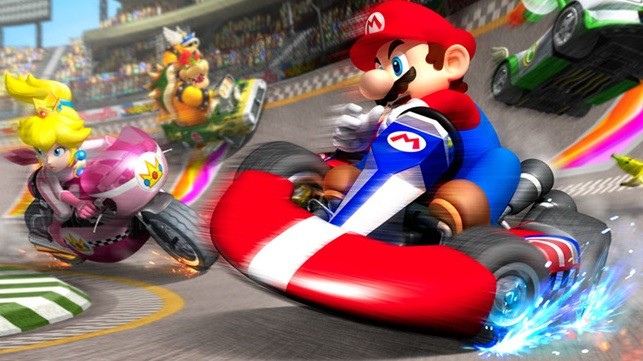
Definitely a more attractive slate of exclusives on the Wii U than on the Xbox One, for me at least. I’m still interested in having a Wii U, but now it’s behind the PS4 in the queue, so to speak. A PS4 I am willing to buy any time I can from launch day onwards. With the Wii U, I can wait at least until Mario Kart 8. If Nintendo are smart, they’ll do a Mario Kart 8 bundle, and I’ll probably buy that. It seems likely, given the success they had bundling Mario Kart Wii with the Wii.
So there you have it. E3 2013, when I was successfully brought back into the core gaming fold. Bravo Sony, keep on trucking Nintendo, make Battlefront good EA, for the love of god, just make it good. And Microsoft…Well, there’s always the integration of Bing with Apple’s Siri to console yourself with.
(Oh yeah, that reminds me, iOS 7 adds gamepad support, so AirPlay games are about to get a lot more awesome. That happened yesterday too. It was a busy day.)
Counter Culture Awards 2012
SteepInKline and TVPaulD get back together to hand out accolades to Games, Movies, Anime, TV shows and other aspects of entertainment in the year that was, 2012.
You can check it out on Spreaker by following the link below:
http://www.spreaker.com/user/4677235/the_counter_culture_awards_show_for_2012
The Counter Culture Podcast E3 Day Zero

Counter Culture returns for its annual E3 Special as your hosts Paul Douglas and Tom Kline take on Day Zero of E3 2012! Listen on Spreaker
E3 2012: Thoughts & Wishes
Get hype people! For the 2012 Edition of the Electronic Entertainment Expo is nearly upon us. In just over 43 hours, the biggest week on the video gaming calendar will kick off when Microsoft Entertainment & Devices/Microsoft Studios take to the stage to deliver the first of the E3 Press Conferences, which play host to the biggest announcements in gaming’s biggest week.
It’s always worth paying attention to E3, not just because you find out about all the coolest, most exciting news regarding upcoming games and hardware but also because of the spectacle. And the memes. Dear god the memes.
And so, I am suitably excited about the week ahead. So here’s a look at what it is about E3 2012 I’m looking forward to. And in case anyone’s wondering, I’m still planning to do a Post about the 2012 Eurovision Final and the fact Soluna Samay obviously should have won, but I’m holding off on it until the EBU releases the split jurors/tele-voting results, because I want to give them a look over first.
Anyway, without further ado, let’s get to my Thoughts & Wishes for E3 2012!
Microsoft
Oh Microsoft, what is with you guys anyway? You had it all. Mindshare, loyal users, buckets of income, a cornucopia of beloved franchises on your hardware…And yet you’ve spent the past three E3s wasting everyone’s time pursuing a fool’s understanding of the Nintendo formula.
I’m not sure what it is which has caused Microsoft’s Nintendo envy to swell to such incredible heights over the past few years…Certainly Nintendo’s considerable success with the Wii had them looking at the Big N with considerable envy – after all, Microsoft had it in their heads that this generation was their turn for dominance. Every platform gets two generations to call their own, right? Nintendo had two, Sony had two…Then Nintendo, in Microsoft’s eyes at least, stole another turn in the winner’s circle.
Winner’s envy has never been a good look or move for Microsoft. The same thing is what led to the stillborn “zune” line of personal media players. Nor has copying ever done Microsoft much good. Windows Vista was a straight clone of Mac OS X with the Windows legacy and it bombed. Windows Phone 7 in contrast, is critically acclaimed. Microsoft, for all its history of shamelessly ripping off other people’s work, is at its best when it’s doing it’s own thing.
Which is why I think they’ve dug themselves into a hole with the Kinect. Kinect is Microsoft copying Nintendo on a conceptual level. The problem with copying that, as it has been with all notable examples of Microsoft copying other people’s stuff, is that Microsoft doesn’t understand what it’s copying. The flagrantly shoddy user experience of the Kinect is the result of Microsoft’s under-developed understanding of the success Nintendo has had with the Wii. They boiled it down to “motion controls = casual audience”. Wrong, so wrong. So painfully, juvenilely over-simplified.
The casual appeal of the Wii was baked into its very being. It’s not motion controls, it’s simplicity that won the day. Simplicity breeds intuitiveness. Kinect is wholly non-simple, and thus counter intuitive. Microsoft failed to realise that while Nintendo fixed the over-complexity of controllers with the Wii, controllers themselves are not inherently complex. Quite the opposite. They abstract complex actions into simpler ones. Kinect does not. The result is a terrible user experience. But nonetheless, one Microsoft seems to have unwavering faith in. No doubt spurred on by inflated hardware sales. The software sales tell a different story. So the big wish for me this E3 in terms of Microsoft…
For the love of everything you hold dear Microsoft, stop banking on the Kinect. The Xbox 360 is awesome in its own right. You thought so once too. Remember 2007?
Do more of that. Don’t go another year spending half your presser showing off games and game features that most people don’t want, and which will suck. No, seriously, almost anything related to the Kinect can and will suck in some way. Because it’s a wrongheaded solution to a non-problem. You’ve done it now, so continue to pursue it if you will, but let’s have some stuff that ignores it, please?
Halo 4 is so far Kinect-less. Keep it that way. New Gears of War, huh? Do yourselves a favour and keep the Kinect the hell off it. If you absolutely have to use it, just use the voice commands. And let’s get some new game announcements which are also Kinect-free. I can’t think of a single game announcement from you last year that was Kinect-free except the two Halo titles.
Cut that shit out Microsoft.
I’d also like to see you un-tie some of the internet service on Xbox 360 from Xbox LIVE Gold subscriptions. It’s flat-out dumb to expect me to pay you for services other platforms provide free access to, especially (though not exclusively) those which are themselves subscription based services. Of course you’re not going to do that though, are you?
Majorly uncool, Major Nelson.
Sony
So…About time you cut the price on the PlayStation Vita, huh?
Sony seems to be a company taking two steps forward then (at least) one back lately. They got away with the PSN debacle last year with surprisingly few wounds to show for it, then set about repeating past errors in the handheld market for…No adequately explored reason. In launching the PS Vita, Sony didn’t learn from Nintendo’s troubles with the pricing. More egregiously, they did not learn from the mistakes of the PSP.
“But Paul!” I hear you cry, “The PS Vita has two thumb sticks and like, zero piracy!”
Yeah, see, those were actually by far the least of the PSP’s worries. The lack or a right stick and the poor security were periphery mistakes. They were lessons easily learnt. Even Nintendo quickly supplied an option for a second analogue input of the 3DS. The lack of a second stick was never as big a deal on the PSP or the 3DS as it was made out to be. The PSP was a failure because it was wrongheaded on a purely conceptual level (The basic system vision and design was fundamentally unappealing outside of a theoretical scenario).
And the Vita is…Identical. The vision and design are…Unchanged. It’s so much just the PSP again that not calling it the PSP2 is quite frankly a laughably transparent coverup of its sameness.
Still, while – like its predecessor before it and unlike the 3DS and DS – it fails to offer anything unique to justify its existence, it could still find a level of success akin to the PSP itself if they’d just drop the damn price. To the point I’ll actually be shocked if they don’t announce a price drop.
In contrast to the poor fortunes of the PSVita, the PlayStation 3 is ticking along nicely. The third-placed home console is nonetheless the most successful third-placed gaming platform ever. The Xbox 360 is only beating the PS3 to second place by a few million units despite a year head start and the PS3’s preposterously shaky origin story as the Five Hundred And Ninety Nine US Dollars PLAYSTATION 3.
Sony needs to continue with its efforts to one-up Microsoft on the entertainment services front, and it looks likely they will. Meanwhile, some of Sony’s special blend of “high profile exclusives” would do well to materialise this holiday season, to see off the juggernaut that is the mighty Halo franchise and Nitendo’s Wii U.
It’s probably tempting for Sony to push a lot of high profile developments to PSVita, but that would be an error. The PS3’s position for the next year is more important. Big games for the PS3 Sony, it has to happen. The Vita has time yet, especially if you drop the price. The PS3’s got a limited opportunity to strike the Xbox 360 dead. Don’t give up on that.
A fascinating rumour doing the rounds pre-E3 has Sony acquiring cloud gaming service OnLive and integrating the service into their gaming ecosystem. It makes some strategic sense – Sony seems to be in love with the idea of PlayStation Anywhere & EVERYwhere. Seems amazing they’d be able to pull off such a high-profile gambit though. Colour me intrigued by the prospect at least.
Nintendo
Oh boy, this is gonna be a big one.
Nintendo are the first platform holder to blink in the arms race that is developing the Eighth Generation Home Consoles, and last year showed off some impressive tech demos and introduced us to their latest wacky idea: “I know, let’s make the DS, but like…HUGE and with your TV!”
Snark aside, Nitendo heard you liked to iPad while you TV’d and TV while you Wii’d & iPad’d so they put an iPad in your Wii so you can iPad while you TV while you Wii.
Again, snark aside, the Wii U is Nintendo’s (unfortunately named) latest vision for disruption in the industry. They’re playing a risky game though – they’re going first. Ask perennial “first out the gaters” Sega, and most recent first blinkers Microsoft, how well going first in the home console arms race usually goes.
Nah it’s probably quicker if I just tell you: Poorly.
Still, Nintendo has never been one to play by the beat of someone else’s drum. The mere existences of the Wii/DS and the DS/Wii U are proof enough of that. What Big N sorely needs to do at E3 then is show us why this…Tablet thing is worth our attention. They need to showcase games which shift the paradigm the way Wii Sports did. Having a map on the tablet isn’t gonna cut it. Blown up DS games won’t either. It needs to be fundamentally disruptive, something totally game-changing. Wii, with Wii Sports, showcased approachability unparalleled since the NES. Wii U is more complex, so approachability will be the remit of the existing Wii Remotes (Which are part of the Wii U ecosystem too of course). The centrepiece tablet controller has to offer something else.
Versatility seems like the obvious pitch Nintendo is going to run with – not least because their promo video last year showcased a number of different use case scenarios.
To that end, Nintendo is in big trouble if they don’t get their online services house in order. Nintendo Network is already an improvement on WiiConnect24, but it needs to put on a pair of big boy pants if Nintendo’s power play on versatility with the Wii U is going to pay off. It needs accounts. It needs to have communication (Seems likely they’re at least planning on sorting that out, the tablet controller is confirmed to support video conferencing in some way at least). It needs periphery entertainment solutions.
Day one, Nintendo needs the Wii U to be as personal as its name and main controller imply, but it also needs to take Nintendo’s existing social strength and combine it with their weakness, online. Nintendo blows the doors off their competitors at local multilayer and intimate social interactions. Now they need to recognise the importance of broader social and networking features and do them right.
This is something they should try and do with the 3DS too. It would benefit from software updates adding these kinds of features. In terms of games, the 3DS is doing alright. There are already some great 3DS games slated to appear at the show (Luigi’s Mansion 2, New Super Mario Bros. 2, Disney Epic Mickey: Power of Illusion) so Nintendo are probably in good shape there.
I’d like to see Pokémon Black & White 2 make some kind of appearance in the presser, but it’s unlikely. Game Freak and Creatures Inc seem to keep their own counsel on when to show off Pokémon franchise stuff. Still, Black and White 2 is probably the DS’s last major hurrah – to the point that it’s almost baffling the pair are not 3DS games – so it’d be nice to see Nintendo show off something.
Third Parties
We have got to see more about this:
Professor Layton Versus Ace Attorney (Née Professor Layton Versus Gyakuten Saiban) is one of the coolest collaborations ever. It’d be great to get a date for it – especially if there as a Western date alongside the obviously earlier Japanese one.
On a similar note, if Capcom could see their way to showing or telling us something about Gyakuten Saiban 5, confirmed as inbound in January. Who’s the star? What’s the platform (It’s obviously 3DS and probably Vita, but damn it I want you to say anyway)? And when can we play it!?
I hear EA is prepping a sequel (Or some kind of revival at any rate) to the most beloved of all Need for Speed games. If the mooted Need for Speed: Most Wanted title does materialise, you bet your ass the Fandom Will Rejoice. I’m really keen to see if they can recapture the magic of Most Wanted’s story, characters, modes and aesthetic. There was something about Most Wanted that was like lightning in a bottle. It was so correct it seemed obvious – hence Carbon was mostly a clone of it (A passable if unspectacular one) and the later Need for Speed games which diverged from its formula have been, to varying degrees, let downs.
Need for Speed needs a kick in the pants after the hugely disappointing The Run (Failed to properly execute on an actually decent premise). Reviving Hot Pursuit did the franchise favours not too long ago, so there’s high hopes for reviving Most Wanted.
I also want EA to announce a Mass Effect Trilogy pack. It seems almost inevitable that such a product will come to be. Having not played Mass Effect but recently having finally found time for Knights of the Old Republic, I’d be very interested in such a pack. Meanwhile, EA also has a giant elephant in the room to deal with from the same developer: The Old Republic.
Despite EA’s repeated posturing that they have no intention of making TOR an F2P title, you have to wonder at what point the dwindling subscription numbers will force their hand. Perhaps they have another solution to the problem up their sleeves. Regardless, it will be interesting to hear what, if anything, EA has to say about TOR. Also, MAKE WITH THE MAC PORT ALREADY.
Jeez.
Another big one from the third parties is Ubisoft’s Assassin’s Creed 3. After a serious bout of Capcom Sequel Stagnation, Ubisoft is finally bringing out an all-new AC and it looks fantastic. They never, in all they hyping of the previous fur games, gave me any idea of why it was I should care. But AC3 looks like it could win me over. In a similar vein, Hitman: Absolution looks like drawing me back to that franchise after some brief flirtations in its early days.
From our friends at Disney, there’s two new Epic Mickey games. The big budget sequel, Power of Two, and the first portable entry, Power of Illusion. They both look absolutely fantastic and I’m keen to see and hear more about them.
Those are the big third party games that spring to mind as being what I’m looking out for. I’ve doubtless missed a few.
Miscellany
As I tweeted earlier, one of the games I want to see isn’t even a real thing, it’s a nebulous wish for a certain kind of game with a certain theme. I don’t even care who makes it. I just…I want a dinosaur game, guys.
A big-budget, kick ass dinosaur game. I want someone to do for Dinosaurs what has been done to death for zombies. I want like Jurassic park: Trespasser done right with modern technologies or something. Maybe you can capture the dinosaurs and try to train them or something? I dunno. Just…Dinosaurs guys, come on. Jurassic Park: The Game from Telltale Games is pretty good (Not quite as good as their Back to the Future effort mind you), but I want something a bit less Heavy Rain and a bit more…Actual video game.
Hell I think at this point I’d buy a Turok game.
Just get it done. Dinosaurs are rad. Why is nobody making dinosaur games? Seriously, I saw like THREE new zombie games last year. It’s played out – and I LOVE killing zombies. Let’s shoot dinosaurs for a while, how about it?
TOTS: On Trial Show
Back in the so-called “Golden Era” of GameSpot, Ryan MacDonald and Richardine K. E. Gallup III IV Jr. created a live weekly show called On The Spot. On The Spot was the shit. It was perhaps the only Live video game show that actually mattered (Outside of E3). Certainly, it would be uncontroversial to say that in all its forms (Except its latter days with a certain bimbo proto-feminist) it was one of the best magazine shows, or shows of any kind, about video games, delivering a heart “fuck you” to the inept management of G4TV.
After the conclusion of last year’s run of On The Spots, GameSpot made the wise decision to put the show on ice and give it a revamp. At this stage, the show had been around for a long-ass time, so it was a good idea to take a step back and re-think things. It’s standard practice in Television, you just have to make sure your shows are fresh.
Unfortunately, GameSpot had the show off the air for months. Then finally, they announced a date. Then pulled it, explaining that they essentially wanted the show to be “even more awesome than we were gonna make it”. Naturally, with all the delays and promises and teasing, the expectations of the show were high.
Perhaps too high. The show that GameSpot took half a year (Including a quarter year delay) to produce was a radical deviation from the original On The Spot. It’s not the same show. Hence, it was given a fancy (And slightly mis-leading) new monicker “Today On The Spot”. It’s no longer live. And the producers are shooting for an average run time of 20 minutes, a minimum of about 15. What they have, is a prototypical web show run time.
Web show run times are not a good thing, even on the web. Programming needs to be thought of in half hour chunks. Why? Because most shows feel rushed if not programmed for a 30 minute or longer slot. Commercial television shows run about 20-22 minutes of content per 30 minute slot, but they don’t have to rush. They’re made into clear segments and the break (Whether it actually rolls ads or is just an act break like on DVD) gives the audience time to catch their breath.
You can do a 20 minute Magazine show. But the only way to do it is to cut back on the variety of content. And I still say don’t do it, because 20 minutes of programming is an anomaly in TV Shows caused by the presence of ads. where it can be avoided, it should because it can sometimes feel insubstantial. This only applies to shows setting a standard run time. Web shows often have varying run times, and there it is okay to have some shorter episodes.
The reason GameSpot opted for this radically curtailed run time is simple. The show is now on 3 days a week – although a casual reading of its name would cause one to believe the show was daily. Essentially, the same amount of content is produced as was before (Albeit now shot to tape and not live). On the face of it, that should be fine. But it just isn’t. Once again, the reason the run time is a problem has nothing to do with the quantity of content, and everything to do with the format.
This is a show that is fantastically well made. Production values are high and much of the talent is there (Tor Thorson, Brian Eckberg, Chris Watters and Co. do a great job “on air”). The format is the show’s elephant in the room. Despite being cut down to 20 minutes, the show is now trying to include a wider variety of content per episode – not per week, per episode. And that’s a big problem. Why? Because the show is too short for this many different things to happen. It feels breathless. Whether it’s Brian Eckberg going from receiving the throwback to throwing it out again via a mere few seconds of banter or Chris Watters flubbing a line as he speeds through a sentence, here we have a show which has no time to breathe.
And the rushed-feel of the show doesn’t just affect the hosts. It’s a tiring show to watch. The breaks between the segments aren’t long enough. It’s a subtle art, defining the different segments of a show. This is a bad example of how to get it done. The pauses and graphical splashes are short-lived and the cuts through black fast when there at all. Cuts and fades through black exist partly so the audience can catch their breath. This show is too short to waste time on filler between its already rushed segments. As a result, it comes across as way more “seat of your pants” than the old live show.
And it kinda suffers for it.
Other than the format, the other key problems with the show are the writing (Which runs the gamut from “Good” to “Corny” to “That’s so funny I forgot to laugh >_>”) and the on-screen personas of some of the talent, and how they interact. The writing is weak, and it suffers both from existing (These all seem like people who ought to just be going from an outline) and from the aforementioned pacing issues. The key to comedy is timing. We’ve already discussed how the show’s timing is screwed up, so what do you think you get when you introduce already poor comedy to poor timing?
Nothing good.
As for the talent personas and interactions, for the most part, they’re fine (If in most cases a little constrained – the show does tend to have a slightly repressed feeling, likely a result of both the fact it’s taped and it’s so short). But the real problems start when you have Chris Watters hosting, with Lark Anderson as his sidekick. These are both very obviously likable guys. But whatever chemistry they have is diminished by the shoddy writing and corny jokes, which makes it hard (As a member of the audience) to develop a rapport with them. It’s the chemistry between the talent that causes audience attachment. That’s why The HotSpot and The Bombcast worked and work.
Somebody also needs to give Lark some onscreen charisma lessons. There’s no problem when he’s talking, but when he’s sitting listening to Chris, he remains perfectly still staring semi-interestedly at Chris as the latter talks. No reaction, no animation until he is called upon. It doesn’t look so great and it makes it even harder for the audience to get in on the hosts’ chemistry.
Anyway, this is just my little critical analysis of Today On The Spot. I promised I would do one, and as you all know, media is kind of my thing. So here it is. Some of you might disagree, that’s cool. Explain why on the Twitters @Jensonb. Or whatever. But for me, this is a show which needs to be aiming for 30 minutes minimum, even with the same amount of content, before I could call myself a fan.
This Blog Post originally appeared on Giant Bomb (dot) Com
Estate of Emergency
CBC has a show called The Fifth Estate (Or, in their world, “the fifth estate”). It’s ostensibly an investigative show, roughly in the vein of the UK’s Dispatches or Panorama. Recently, the show aired this monstrosity. It is the single worst piece of journalism I have seen in quite some time. It is a textbook example of where media is evil.
As someone who loves to make and consume media of all types, it pains me when I see it being used for ill-deeds. To some, that sentence would conjure up images of government propaganda, to others it would connote “corrupting our nation’s youth with the values of people with more open minds than us”.
Few though would recognise a very real misuse of the media which occurs, to varying degrees, every day. I call it casual sensationalism. Casual sensationalism is a very special kind of lying, a unique way of mis-leading people which is impossible without the media.
Traditional sensationalism involves what is sometimes referred to as “superliminal” messages (A reference to an episode of The Simpsons). That is, very, very open statements of opinion proclaimed with an urgency of conviction and provocative rhetoric designed to encourage the audience to agree with the general message. Newspapers such as The Sun and The Daily Mail do this all the time, as does Fox News in the US when they run exposés.
Casual sensationalism is far more insidious and is in use across all outlets in all media. In casual sensationalism, the outlet does not make it obvious they have an agenda – often proclaiming the opposite (Fox News does this with much of its output). This is the biggest moral problem with casual sensationalism. This lack of honesty is used to fool untrained audiences into believing what they are seeing is news and not opinion.
But how is it done and how does it relate to Top Gun?
The most common trick is the “expert”. Media outlets often bring out an “expert” to back up a claim. This talking head then says a piece which reflects the editorial opinion, and then the conversation is done. The interviewer/moderator does not call this person out or question them – maybe only presenting the alternative viewpoint in order to allow the “expert” to dismiss it.
By bringing up the alternative viewpoint at all, the outlet makes itself appear unbiased. But pay attention to the framing of the questions. Compare it to the interview with the dissenting voice. These interviews are almost always later, and are tonally more aggressive than those withe “expert”. most would never notice this discrepancy.
Why? Because the outlet inserts sufficient screen time or column inches between hearing from the “expert” to enforce their claim as truth in the audience, so that by the time the dissenting voice is heard from, unsuspecting viewers are already being told he or she is wrong, no matter what they say.
In panel discussions, the gap between hearing from the two is not there. But rest assured, you always hear from the one the outlet agrees with first, and questions directed at the dissent are usually “response” questions – designed to make the dissenting opinion appear weak, on the defensive.
Then of course, there is the selective use of quotes, where only material which helps the outlet’s point is used. I think it’s pretty obvious what that does.
The Fifth Estate’s “Top Gun” does all of this and more. The presenter acts as if she is a concerned citizen, only looking out for our interests. But she never gives the people who are in favour of gaming a fair shot.
Whenever they cite a positive, or a flaw in her argument, she immediately puts them on the defensive, or is aggressive in her attempts to force the into proving her point (In one section, she badgers the interviewees, trying to force them to give a quote which supports her apparent belief that video games are immoral rot).
Not once does she question the parade of psychologists, therapists and concerned friends or family about their belief that games are at fault. She fires off questions which allow them to make their case, and spoke to them first. It’s classic “expert” interviewing – softball “make my point for me, you’re right” questions.
The dissenting voices? They are left to be under siege by aggressive “you’re wrong because of this, that and the other thing, how dare you think what you do” questions.
The impression an uninformed viewer would get is that:
A)All gamers have addictive personalities
B)Brandon Crisp’s death was more to do with video games than personal problems
C)The video game industry should be doing parents’ jobs for them
D)A majority of gamers are immoral and aggressive, and those who are not fall prey to the evil machinations of this multi-billion dollar brain-rotting empire
E)The report must be accurate because the kid’s family and game-playing friend seemed to be agreeing with it
F)Major League Gaming is irresponsible
G)This was not an isolated incident
None of these things are true. And yet, without prior knowledge of the events, the gaming community, games as a medium and media tricks in general, I might not have known this.
And therein lies the concern for me. This is not a show watched by people who are involved heavily in the gaming community. Rather, it is watched by the same kinds of people as are likely to allow it to create a moral panic.
It is dangerously irresponsible for a show with such an audience to be allowed to present such blatant falsehoods as fact for the purposes of spewing editorial drivel, without any dissenting opinion being given adequate coverage.
Top Gun is an utter disgrace. It is a disgrace to CBC (Who should not have allowed it to be paid for). It is a disgrace to Canada (Which is more open-minded and left-wing than this corrupt drivel reflects). It is a disgrace to television (Which gets a bad name every time rubbish like this is aired).
The show’s producers, directors and writer/presenter should be ashamed. But they probably aren’t and here’s the worst bit:
Neither are the thousands upon thousands of other producers, directors, writers and presenters guilty of this kind of thing the world over.
 TVPaulD.com